Across Asia
Sodium-Ion Batteries in Asia: Watch the Evidence Behind the Announcements
A new battery chemistry is gaining attention. Philippine buyers still need a supported product and a site-specific comparison.
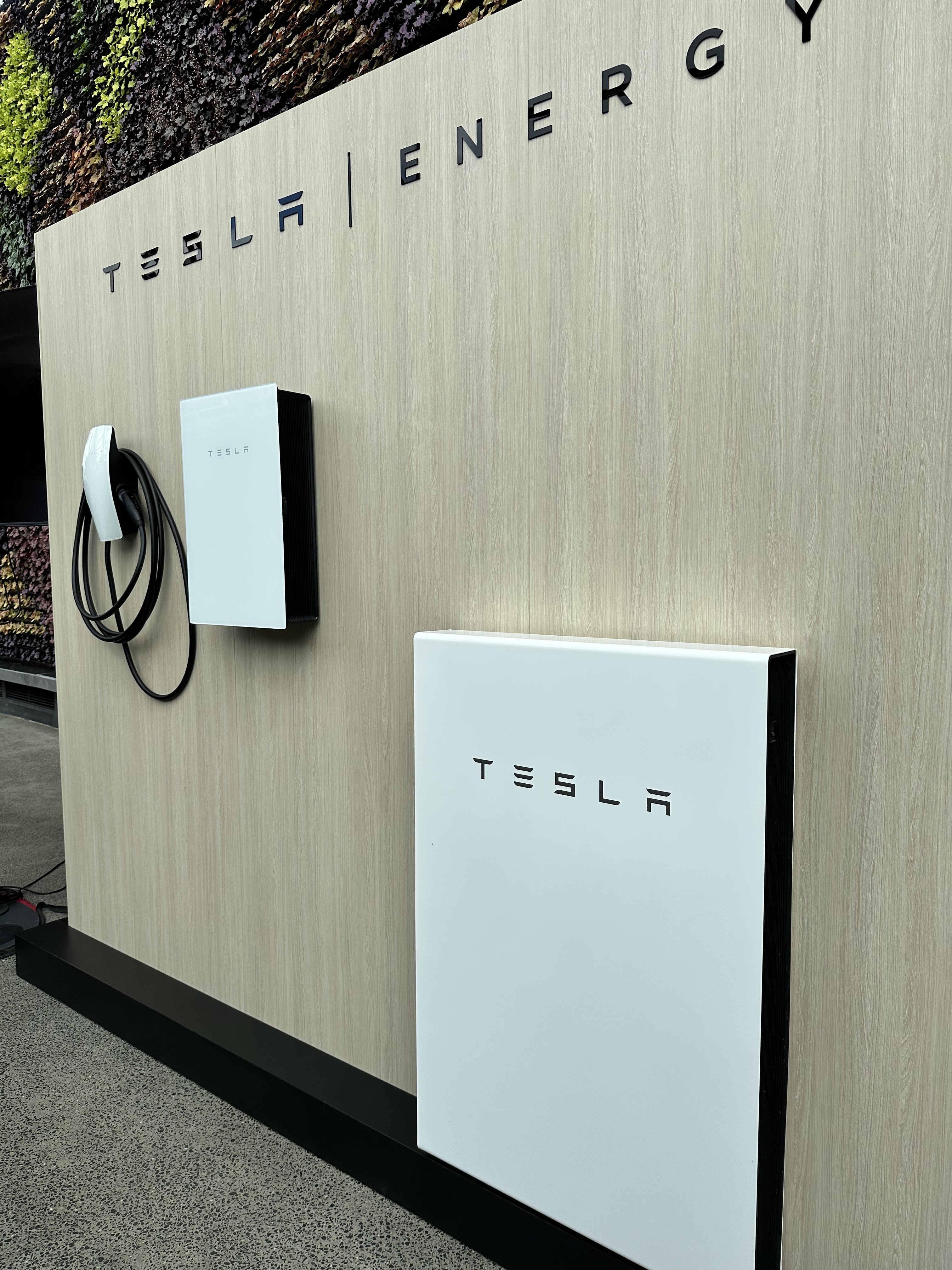
Battery news increasingly includes sodium-ion alongside familiar lithium-ion technologies. New factories and product announcements make the subject worth following, especially for people planning a future solar-and-storage system.
For a Philippine household or business, the useful decision is more concrete than choosing a winning chemistry. It is whether an identifiable, supported system can meet the required service at the property, with documentation that allows the buyer and installer to assess the complete offer.
Put the announcement in market context
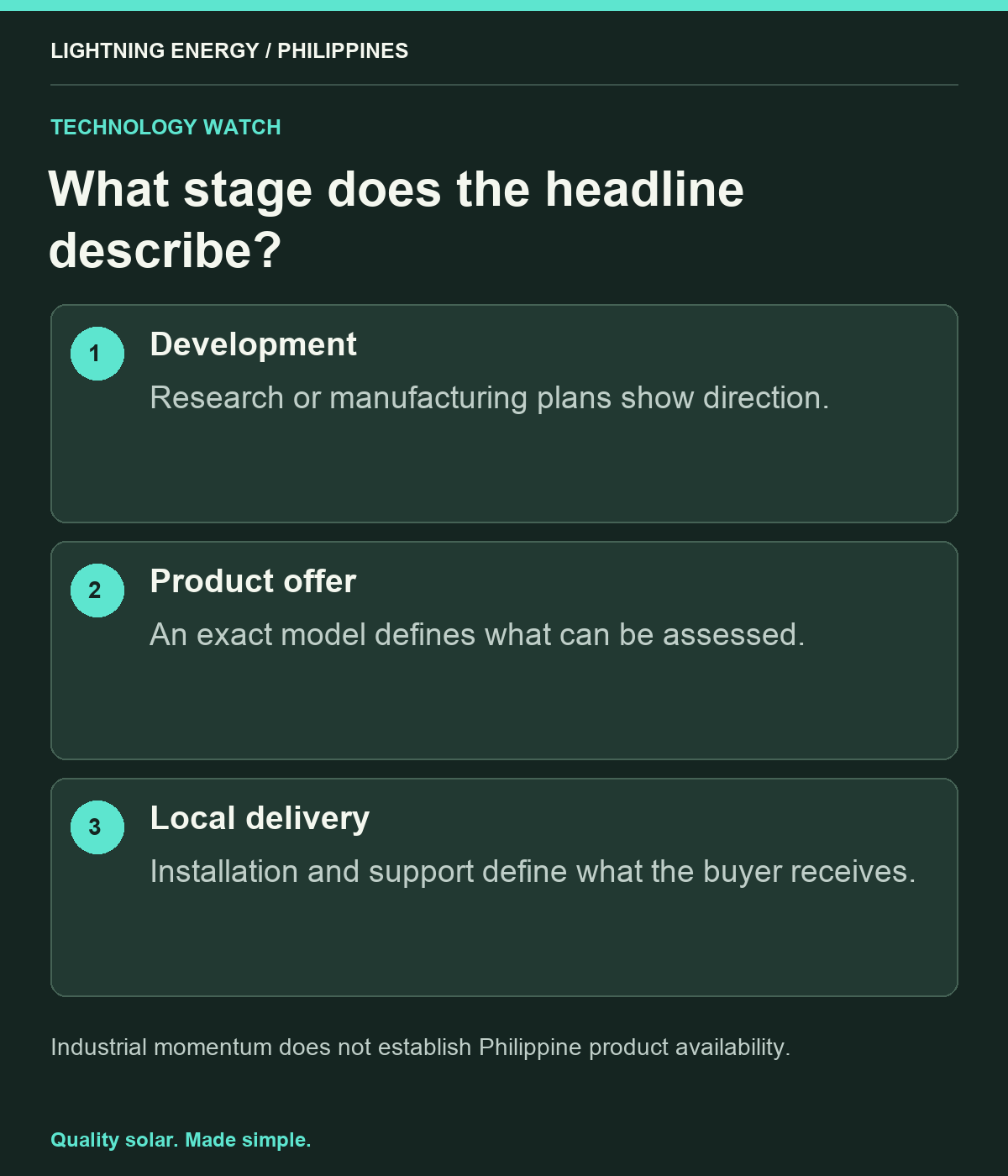
The IEA’s February 2026 commentary describes growing sodium-ion investment while noting that its supply chain remains less developed than lithium-ion’s. [1] An announced factory is therefore different from a locally supported residential product. Record which stage a story describes: research, a production plan, a shipped product or a commissioned installation. These stages all matter, but they answer different questions. A homeowner needs evidence about the actual equipment available to purchase, rather than assuming industrial momentum guarantees local availability.
Compare an exact system, not a chemistry label
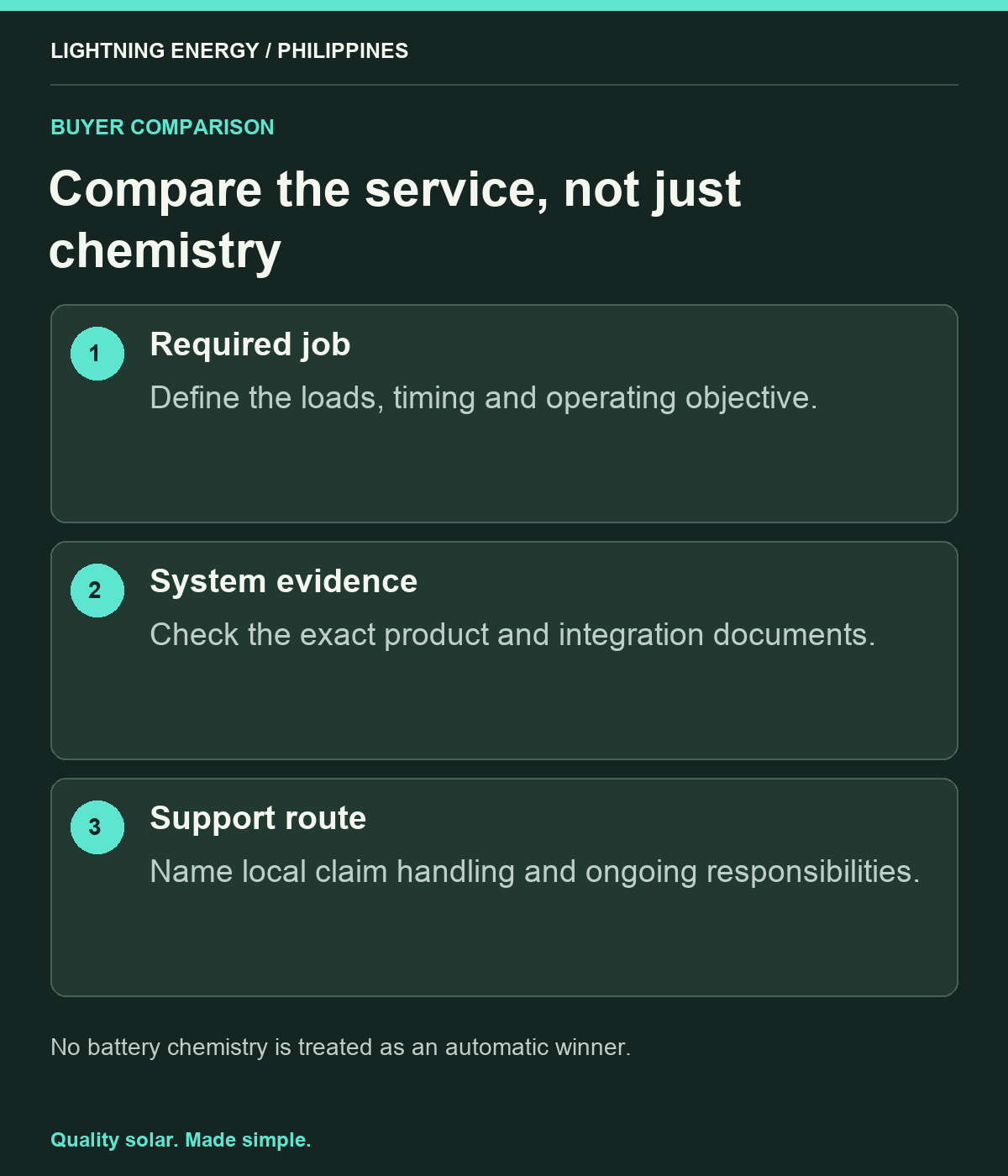
Ask for the proposed battery model, usable capacity, compatible equipment, operating limits and applicable documentation. Have the installer explain how the system is intended to work at the site. Two products described with the same chemistry can still have different designs and service arrangements. Likewise, a headline advantage in one application does not settle a household purchase. Put the complete offers side by side and mark any specification that is missing or cannot yet be verified.
Keep vehicle data in its proper lane
The IEA’s 2026 vehicle-battery analysis distinguishes battery chemistries, regional markets and stationary-storage applications. [2] A car-industry price or performance headline should not be copied directly into a Philippine home-storage quotation. The buyer is purchasing installation, integration and support as well as a battery. Ask suppliers to explain which evidence applies to the product offered and which is background industry information. A clearly stated boundary is more useful than a claim that one technology is automatically cheaper in every setting.
Start with the service you need
Write down whether the intended job is moving some solar energy to another time, supporting selected loads during an outage or meeting a documented business requirement. Then ask the designer to assess options against the same brief. For an illustrative home office, uninterrupted work may depend on equipment and arrangements beyond the battery itself. Do not allow a novel chemistry to displace the ordinary questions about system architecture, supported loads, operating behaviour and the limits of the proposed service.
Make the support route visible
Identify the party that accepts warranty claims in the Philippines and the documents needed to make a claim. Clarify responsibility for diagnosis, travel, replacement equipment and recommissioning under the actual contract. Ask how compatibility and firmware support are handled over time. These questions do not presume that a new technology will fail. They establish what the owner is buying and make it possible to compare emerging and established offers without relying solely on brand recognition or launch publicity.
Set a useful review trigger
If the available evidence is incomplete, choose a specific point at which to reconsider: a supported local model, a completed independent assessment or a documented installation pathway. Keep that trigger alongside the current project timetable. A business with an immediate requirement can assess available options now while still following future developments. A household with no urgent need may choose to wait. Neither decision requires a prediction about commodity prices or a promise that the next generation will always be better.
Keep curiosity and procurement together
A technology watchlist can capture new announcements, while a purchase checklist records the exact evidence required before payment. Lightning Energy Philippines can discuss available solar-and-storage options against the property’s needs. Sodium-ion deserves attention as part of a changing industry, but its name alone is not a suitability assessment. The strongest purchase decision connects a real service requirement to a complete, documented and locally supportable offer, with uncertainties stated plainly rather than hidden behind an exciting headline.
Sources & further reading
Sources used for this guide. Policy and product details should be checked for your particular installation.
- IEA: Sodium-ion Battery Momentum Grows, but Challenges Remain2026; accessed 27 September 2026
- IEA: Global EV Outlook 2026—Electric Vehicle Batteries2026; accessed 27 September 2026