Solar FAQs
Where Does Solar Electricity Go When the Battery Is Full?
A full battery changes the available destination for solar. The system may serve loads, export where permitted or reduce generation.
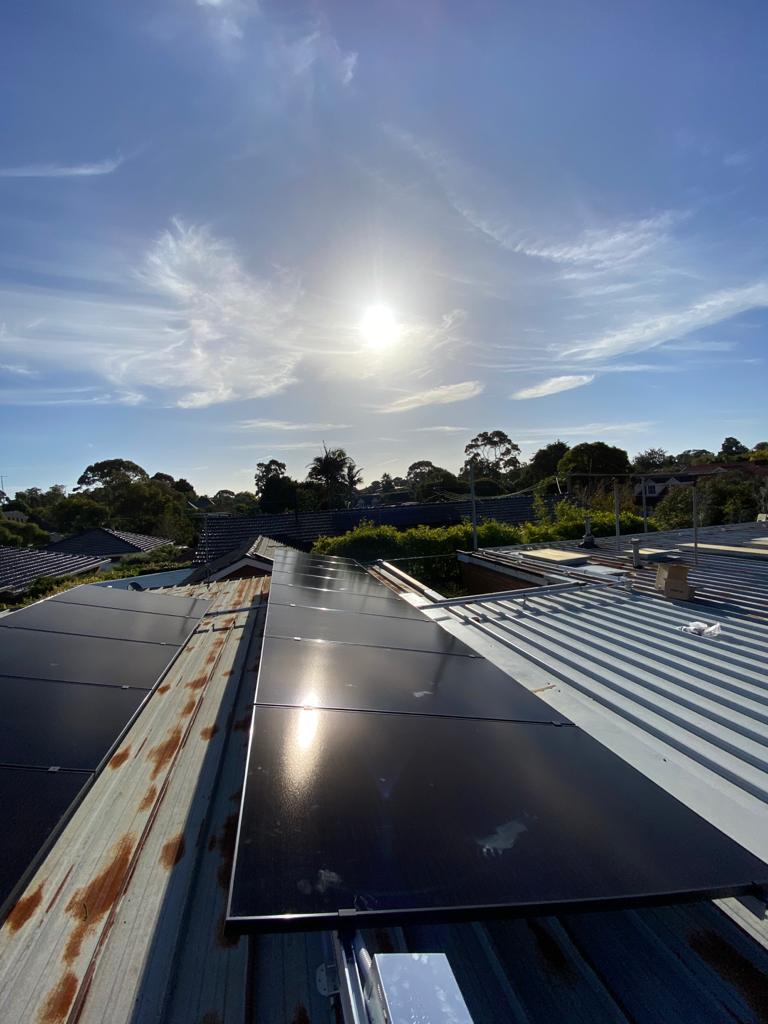
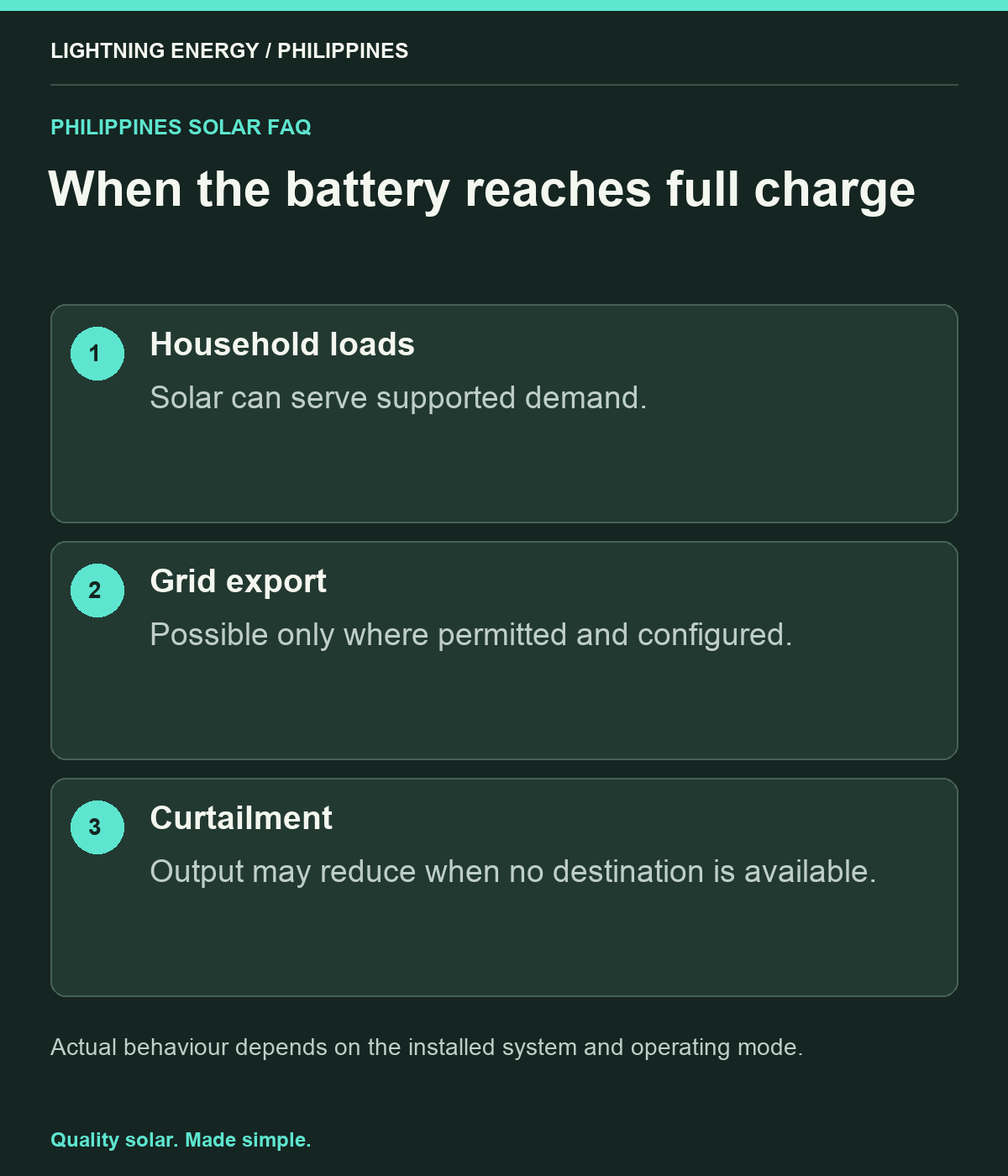
It depends on the operating mode and connection agreement. Solar can continue serving the household, surplus may be exported if permitted, and the system may reduce generation when there is nowhere else for energy to go. A full battery does not mean electricity must be forced into it or that something is necessarily wrong.
Follow the available destinations
Ask the installer to draw the normal energy paths for your system: solar to household loads, solar to storage and any permitted grid export. Then ask what changes when storage can no longer accept charge. The answer should match the actual equipment and settings.
Victron’s ESS documentation describes supplying loads, storing energy and exporting surplus in suitable configurations. [1] That is an example of controllable energy flow, not permission for every Philippine installation to export. Keep the utility-approved operating mode visible in the explanation rather than treating export as an automatic feature of owning solar.
Distinguish available sunlight from generated energy
When output is limited, not all potentially available solar energy is converted into delivered electricity. Do not imagine unwanted electricity piling up on the roof. Ask whether the app shows actual production or an estimate of available potential; those values have different meanings.
A lower generation figure during a low-demand afternoon may be consistent with the design. Record household load, battery state and export settings before comparing that day with a day when the battery was empty. The panels can face similar sunshine while system controls lead to a different observed output curve.
Expect different behaviour during an outage
Tesla explains that, during backup operation, excess solar can be curtailed when it cannot be used or stored. [2] The exact restart and control behaviour is model-specific, so ask for your system’s documented sequence.
During an outage, there is no normal grid destination for surplus. The backup system must balance the supported loads and storage within its limits. Do not bypass controls because the app appears to show unused sunshine. A competent handover should explain why solar output may rise or fall even on a clear day while the home is operating independently.
Use a simple illustrative afternoon
Imagine solar could produce 4 kW, the house needs 1 kW and the battery is full. If permitted exports are available, the design may send surplus to the grid within the applicable limit. If exports are not allowed, output may be reduced to match what the system can use.
These numbers are invented to explain the decision paths. They are not a forecast or wiring instruction. Ask the installer to show the equivalent situation for your equipment and clarify any control tolerances. Do not infer from this example that every inverter supports the same modes or transitions.
Consider scheduling without wasting energy
If useful tasks can safely move to sunny hours, that may create more direct use for solar. Consider laundry, approved charging or other necessary loads that fit the household routine. Do not switch on appliances purely to avoid seeing curtailed output.
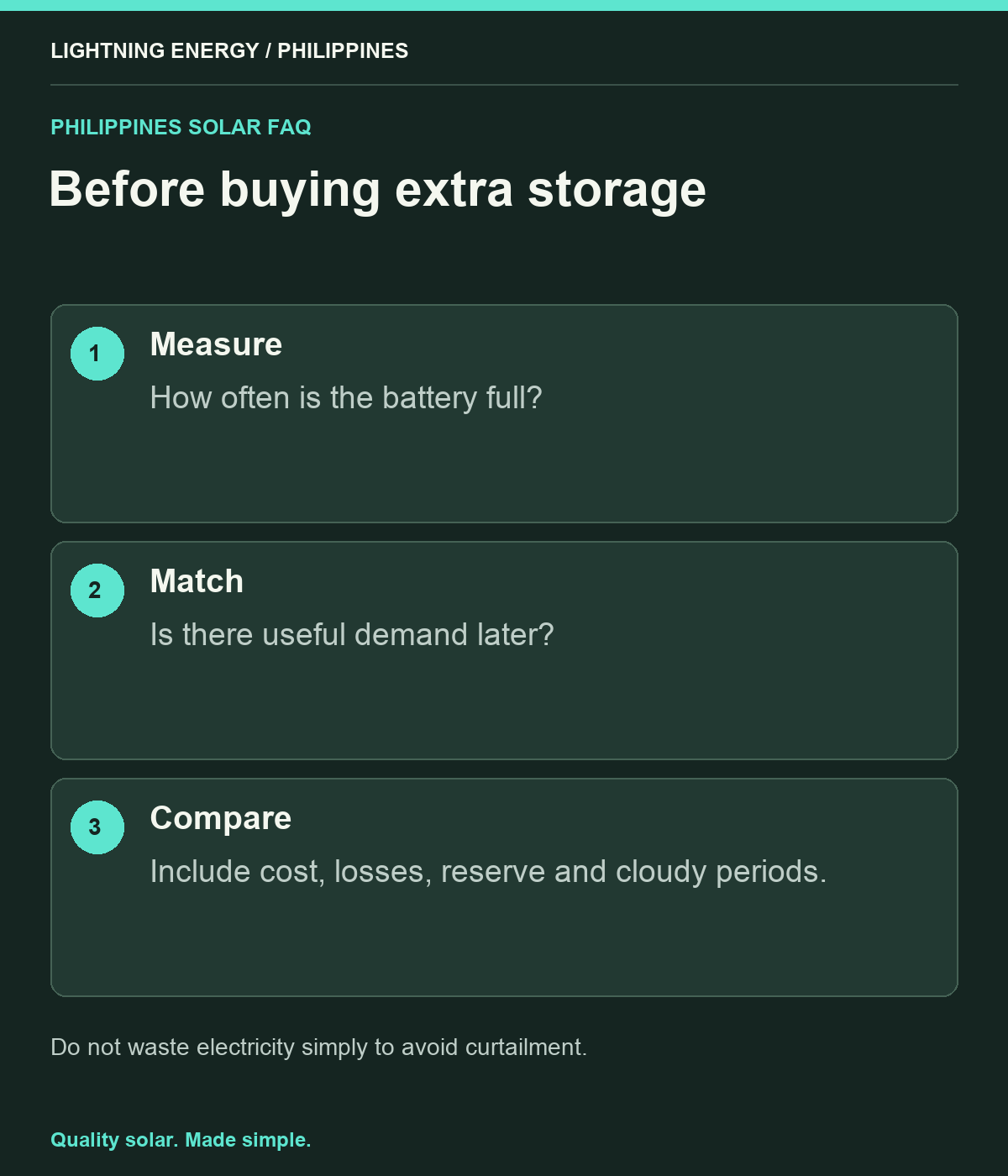
Before buying more storage, review how often the battery is full, how much potential surplus exists and what later demand it could serve. A larger battery adds cost and other constraints. Ask for a measured or modelled comparison, including cloudy periods, rather than sizing storage around one unusually sunny afternoon.
Know which patterns deserve a service call
Ask for the expected behaviour to be documented at handover. Report persistent unexplained shutdowns, alarms or a battery that refuses charge when it should accept it. Save dates and screenshots and let qualified personnel diagnose the cause.
Lightning Energy Philippines can explain the energy paths in your proposed or existing system. Bring the operating mode and utility arrangement into the discussion. The useful outcome is knowing when a full-battery plateau is normal control, when scheduling may help and when there is evidence of a fault, without treating every unused ray of sunshine as a reason to buy more equipment.
Sources & further reading
Sources used for this guide. Policy and product details should be checked for your particular installation.
- Victron Energy — ESS Introduction and FeaturesAccessed 27 September 2026
- Tesla — Best Practices During Power OutagesAccessed 27 September 2026