Solar for business
Solar for Urban Cold Stores: Protect the Product, Measure the Load
A cold-store project should start with product requirements, compressor behaviour and the timing of deliveries.
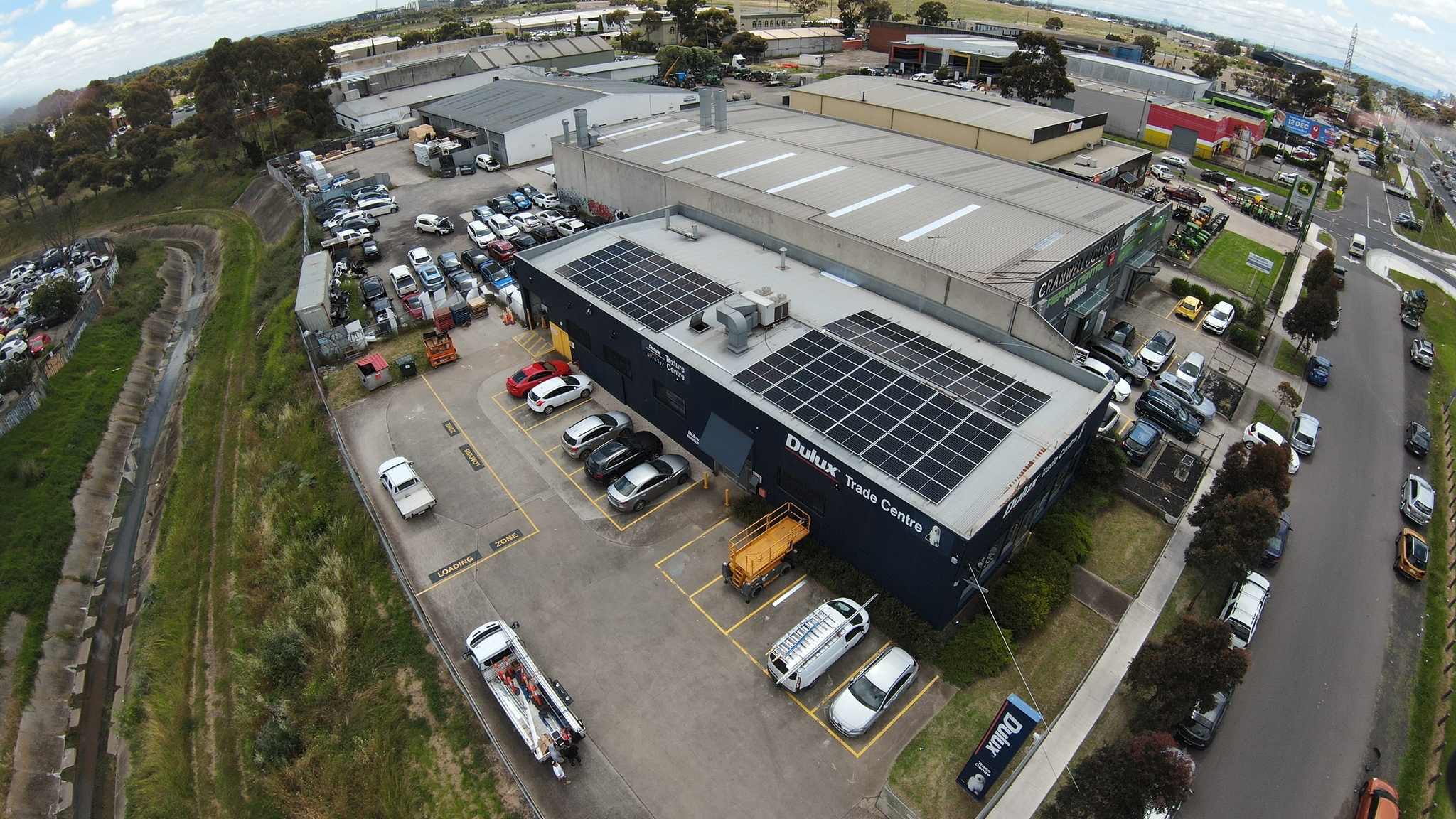
A cold store's electricity bill is connected to an inventory that must remain within its required conditions. That makes the solar conversation different from an ordinary warehouse discussion. The project should improve energy management without treating product protection as a variable that can be relaxed to make a calculation look better.
For Philippine wholesalers, distributors and food businesses, begin with the refrigeration operation. Understand normal demand, delivery patterns and continuity requirements, then evaluate solar and storage against that evidence. This framework is about project planning, not refrigeration operating instructions.
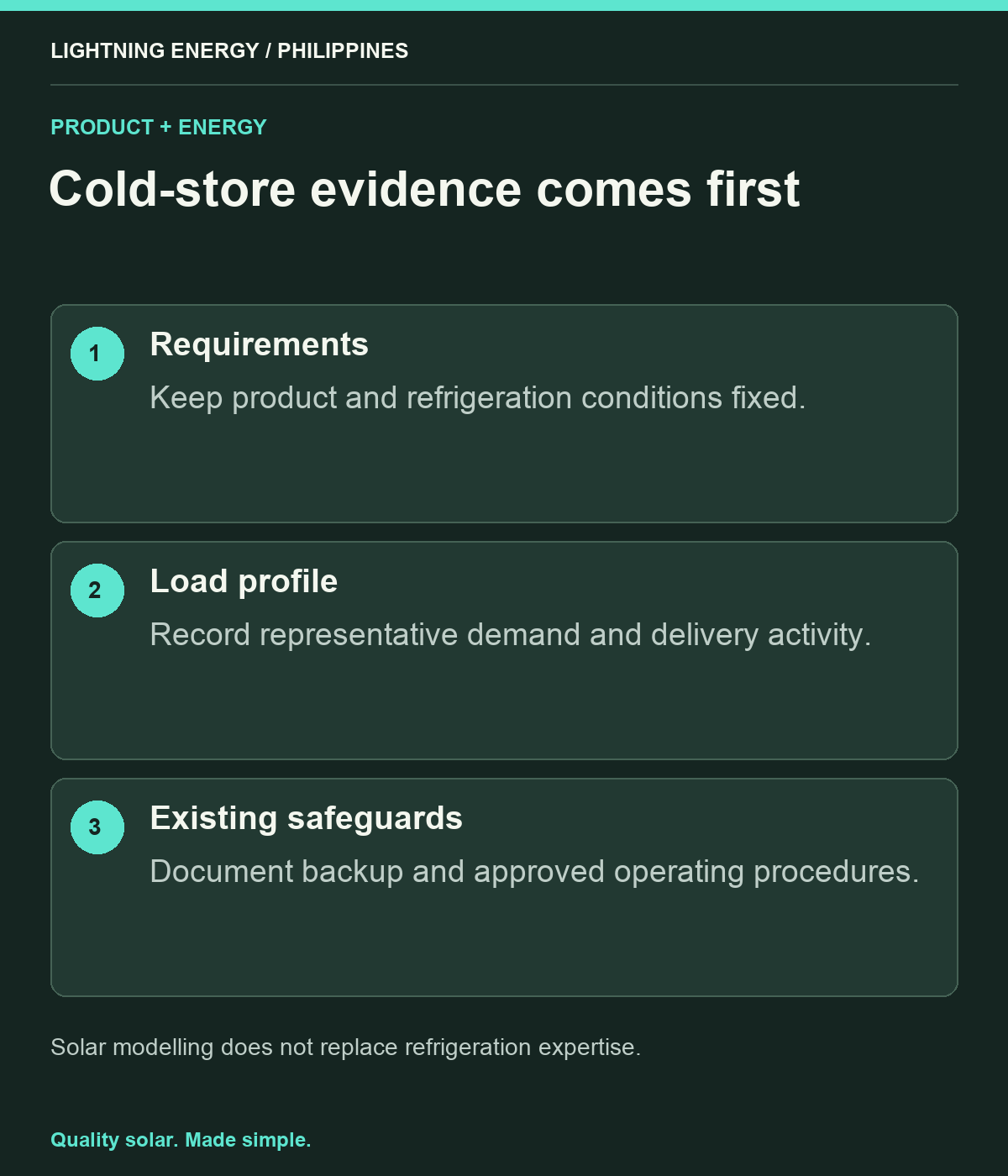
Put the cold-chain requirements in the brief
Ask the responsible refrigeration and product specialists to establish the required conditions and existing safeguards. Identify which spaces and equipment serve which products. Record operating hours and delivery windows. The IEA's regional outlook highlights the growing importance of cooling demand. [1] That broad trend does not describe this facility's consumption, so the design still needs representative measurement. A site-specific energy profile is more useful than assuming that every cold room draws the same power continuously.
Measure normal and busy operating periods
Collect interval data if available and note changes in stock movement, door activity, maintenance and occupancy. Use the refrigeration team's explanation when a pattern looks unusual. Do not infer a safe operating change from a solar graph. An illustrative wholesaler might receive a large delivery at a different time each week, creating a pattern that a short sample misses. Capture enough ordinary variation to make the model meaningful, and state any limitations of the data provided to bidders.
Keep efficiency work visible
Have the appropriate professionals assess existing refrigeration condition and any planned improvements. Model committed efficiency changes separately so that the same reduction in electricity is not credited both to equipment repairs and to solar. Avoid sizing a long-lived energy system around a known fault that the business intends to fix. Equally, do not assume an unapproved upgrade has already reduced demand. The procurement model should distinguish the facility as it is, the changes already funded and the possibilities still being considered.
Define the storage duty precisely
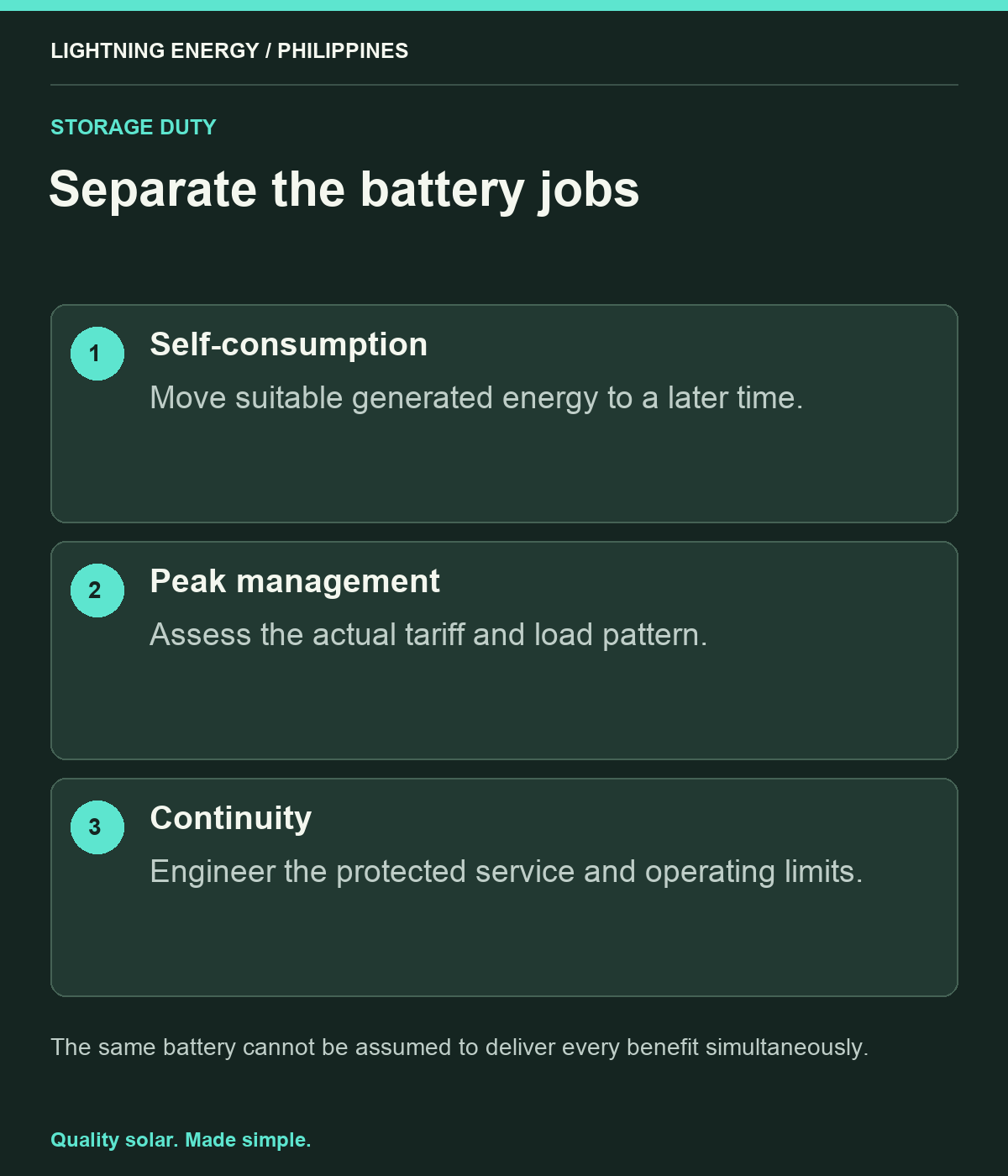
IRENA identifies several storage applications, including self-consumption and industrial peak management. [2] Those uses differ from a protected cold-chain continuity requirement. Ask the designer to show the proposed duty, power capability, available energy and relationship with existing backup. Starting behaviour and control interactions must be professionally assessed. A battery proposal should explain what it supports and for how long under stated assumptions, rather than implying that a large cabinet automatically protects all stored goods through any interruption.
Review commercial risk without inventing savings
The business may value continuity highly, but avoid adding a speculative inventory-loss figure to ordinary electricity savings and calling the sum guaranteed profit. Keep the resilience objective as a separate decision unless the business has a documented method for valuing it. Compare tariffs, export assumptions if applicable, financing and service costs transparently. A lower-demand case is useful when stock volumes vary. The owner should understand which benefits follow from measured consumption and which depend on uncertain future operating conditions.
Plan commissioning around product protection
Agree installation and testing windows with the cold-store operator. The responsible team should approve any interruption and maintain existing safeguards throughout the work. Ask the project professionals to document control settings, test results and handover boundaries. Do not use a live product environment as an informal experiment. The facility should receive clear instructions for reporting alarms and obtaining support, with technical work reserved for qualified personnel. Include the refrigeration service provider where the new electrical arrangement affects its equipment.
Make the next assessment evidence-led
Bring bills, interval data, delivery schedules, refrigeration records and the continuity plan to Lightning Energy and the relevant specialists. Request a design that preserves the product requirements and separates routine generation from any storage duty. The strongest cold-store project is operationally specific. It improves the electricity arrangement while leaving the owner able to explain how the stock remains protected, how performance is assessed and who responds when the facility needs service.
Sources & further reading
Sources used for this guide. Policy and product details should be checked for your particular installation.
- IEA: Southeast Asia Energy Outlook 2024, executive summary2024; accessed 27 September 2026
- IRENA: Energy storage costsAccessed 27 September 2026