Solar FAQs
Why Doesn’t a 5 kW Solar System Produce 5 kWh Every Hour?
Panel capacity is a test-condition power rating. Daily energy depends on changing sunlight, temperature, layout and system limits.
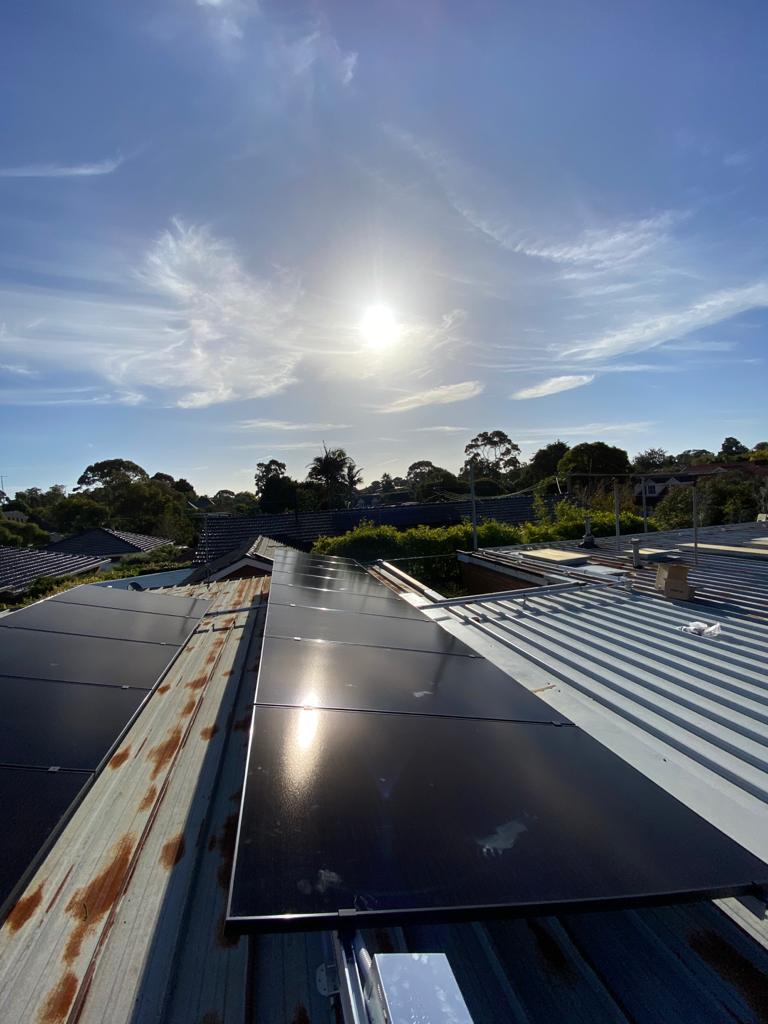
Because kilowatts and kilowatt-hours describe different things, and the nameplate rating is not a promise of constant output. A 5 kW array describes rated power under specified conditions. Its energy over an hour or day depends on how output changes during that period. A quotation should explain both the rating and the expected energy range.
Separate power from energy
Power is the rate of producing or using electricity at a moment. Energy adds that power over time. If an imaginary system held exactly 2 kW for three hours, it would produce 6 kWh. Real rooftop output changes continuously, so daily energy requires the whole day’s production curve.
Use the units carefully when comparing packages. Ask whether a number refers to panel DC capacity, inverter AC capacity, battery power or battery energy. A sales graphic containing only “5 kW system” leaves several important details unstated, especially when storage and backup are part of the offer.
Understand the panel rating conditions
LONGi’s manual identifies standard test conditions for module electrical ratings, including defined irradiance and cell temperature. [1] Your Philippine roof does not remain at those laboratory conditions from sunrise to sunset.
Ask for the supplied module datasheet and the total rated DC capacity. Check that the panel quantity multiplied by each panel’s rating matches the proposal. Then keep that capacity separate from the forecast annual kWh. The arithmetic verifies the equipment list; it does not independently prove how much useful energy the installed system will deliver at your address.
Look at the daily curve
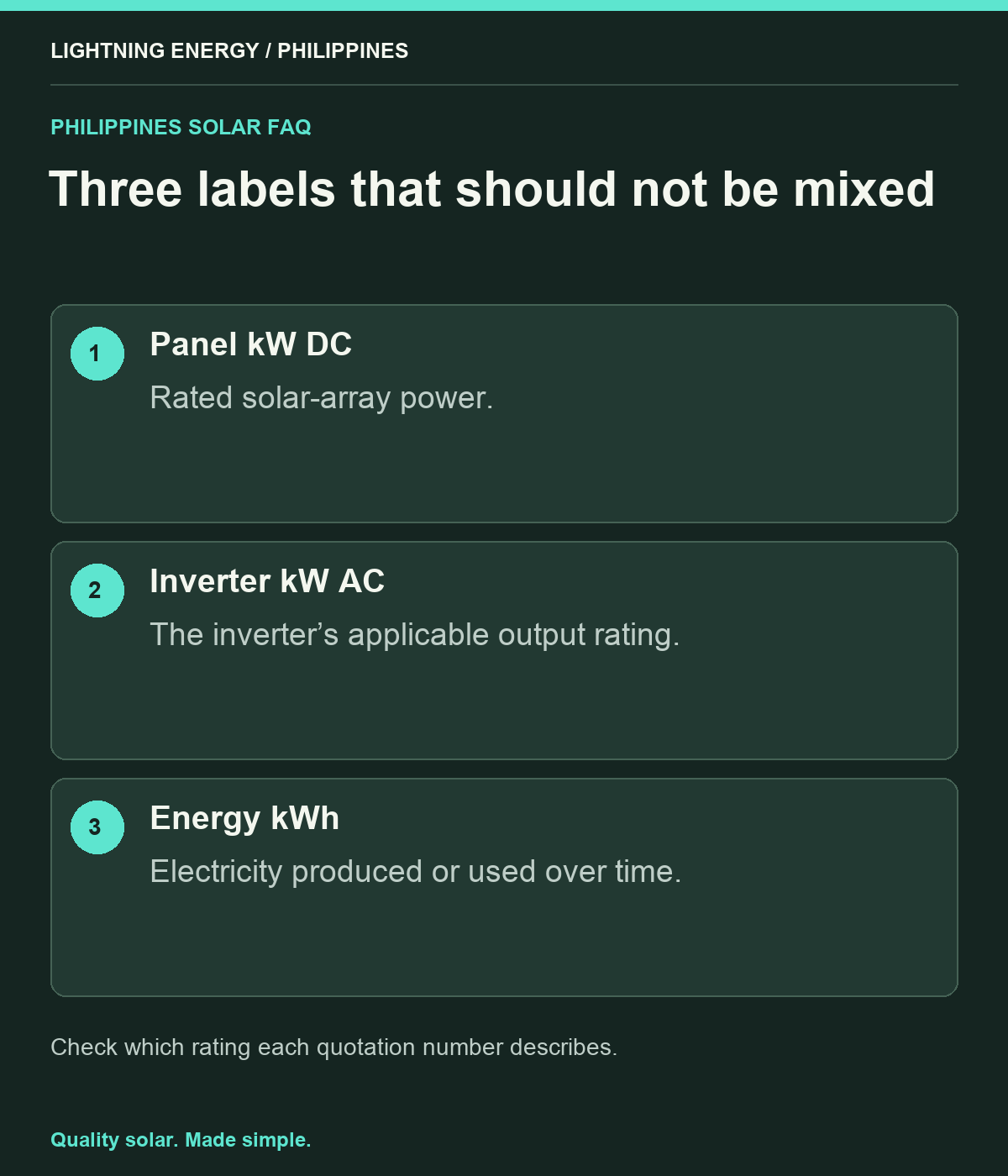
A useful app shows how production rises, varies with conditions and falls later in the day. Clouds, shadows and system controls can change the curve. A single peak screenshot is therefore a poor way to compare one household with another or one month with another.
Ask the installer to explain what a normal curve might look like for your roof faces and operating mode. Keep a few representative days as a baseline. If a sudden persistent change occurs, compare weather, alarms and settings before deciding that a lower peak alone proves defective panels.
Read estimates as modelled outcomes
PVWatts explicitly cautions that its forecasts contain assumptions and uncertainties. [2] Ask which weather data, orientation, losses and inverter assumptions underpin your quotation. Request monthly energy estimates rather than dividing one annual figure equally by twelve.
For an illustrative comparison, two 5 kW arrays may have different shade, roof direction and inverter arrangements. Their nameplate labels can match while energy differs. Do not insert an invented national daily yield as a substitute for a site assessment. The proposal should explain why the chosen estimate is appropriate for your specific installation.
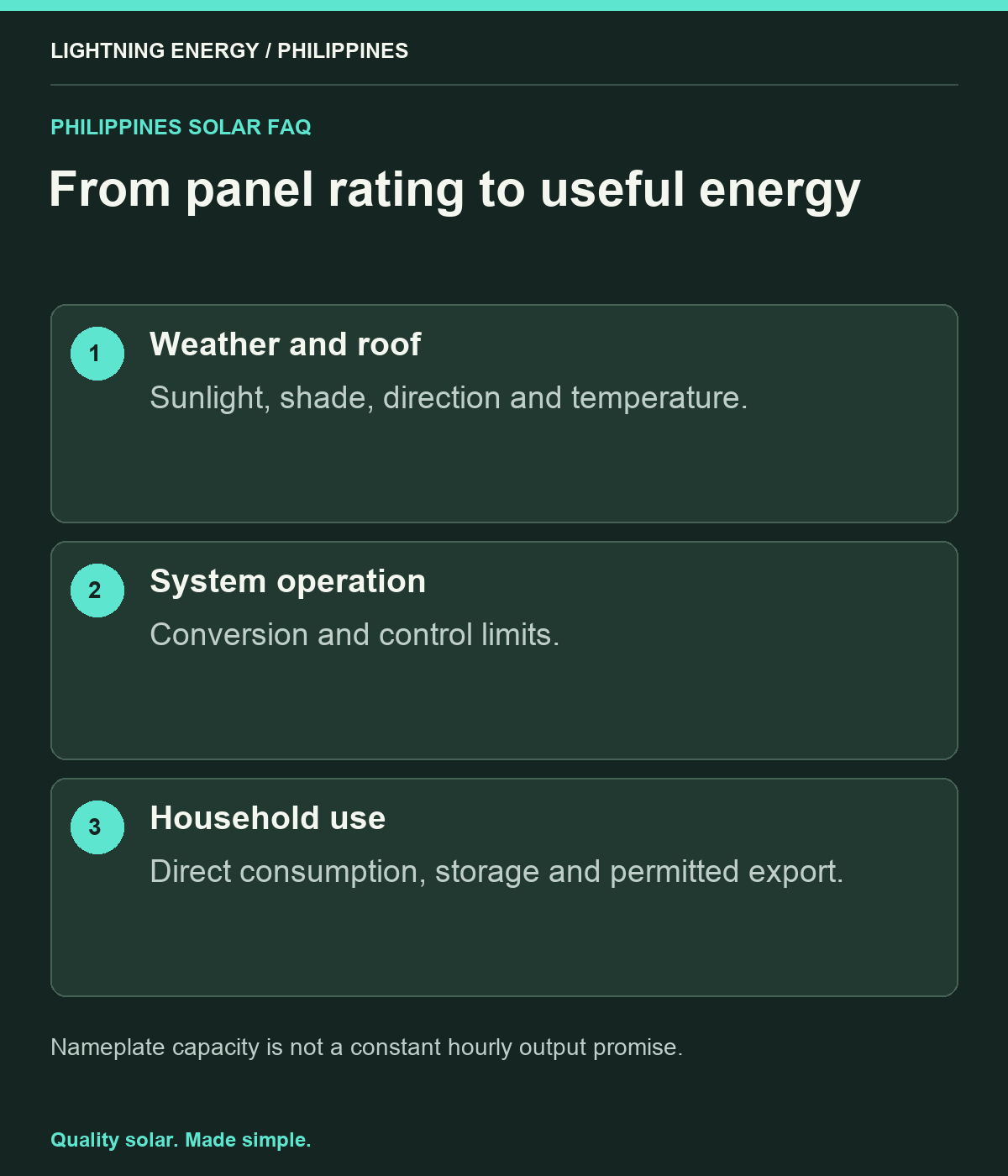
Keep generation and bill reduction separate
Even a sound generation estimate does not say how much of that energy you will use immediately. Household timing, permitted exports and any battery operation affect the financial result. Ask for generation, direct use, export and storage assumptions to be shown separately.
A house empty during the day should not automatically receive the same savings forecast as one with daytime cooling and home-office loads. Use your actual routine and utility terms. If the installer offers a guaranteed outcome, read exactly what is guaranteed, how it is measured and which conditions or exclusions apply.
Ask for a useful performance benchmark
At handover, request expected seasonal ranges, monitoring access and a clear process for reporting unusual output. Agree what information to collect before a service call. Keep bills and app records aligned by date so the discussion can distinguish generation from billing.
Lightning Energy Philippines can explain the capacity and energy figures in a proposal without hiding behind a single headline number. Bring your questions about watts, kilowatts and kilowatt-hours. Understanding those units makes it easier to compare systems, recognise normal variation and ask for evidence when a forecast seems unrealistically precise.
Sources & further reading
Sources used for this guide. Policy and product details should be checked for your particular installation.
- LONGi — PV Module User Manual, 2026Accessed 27 September 2026
- National Laboratory of the Rockies — PVWatts Calculator and Model NotesAccessed 27 September 2026