Solar FAQs
What Should a “Turnkey” Solar Quote Actually Include?
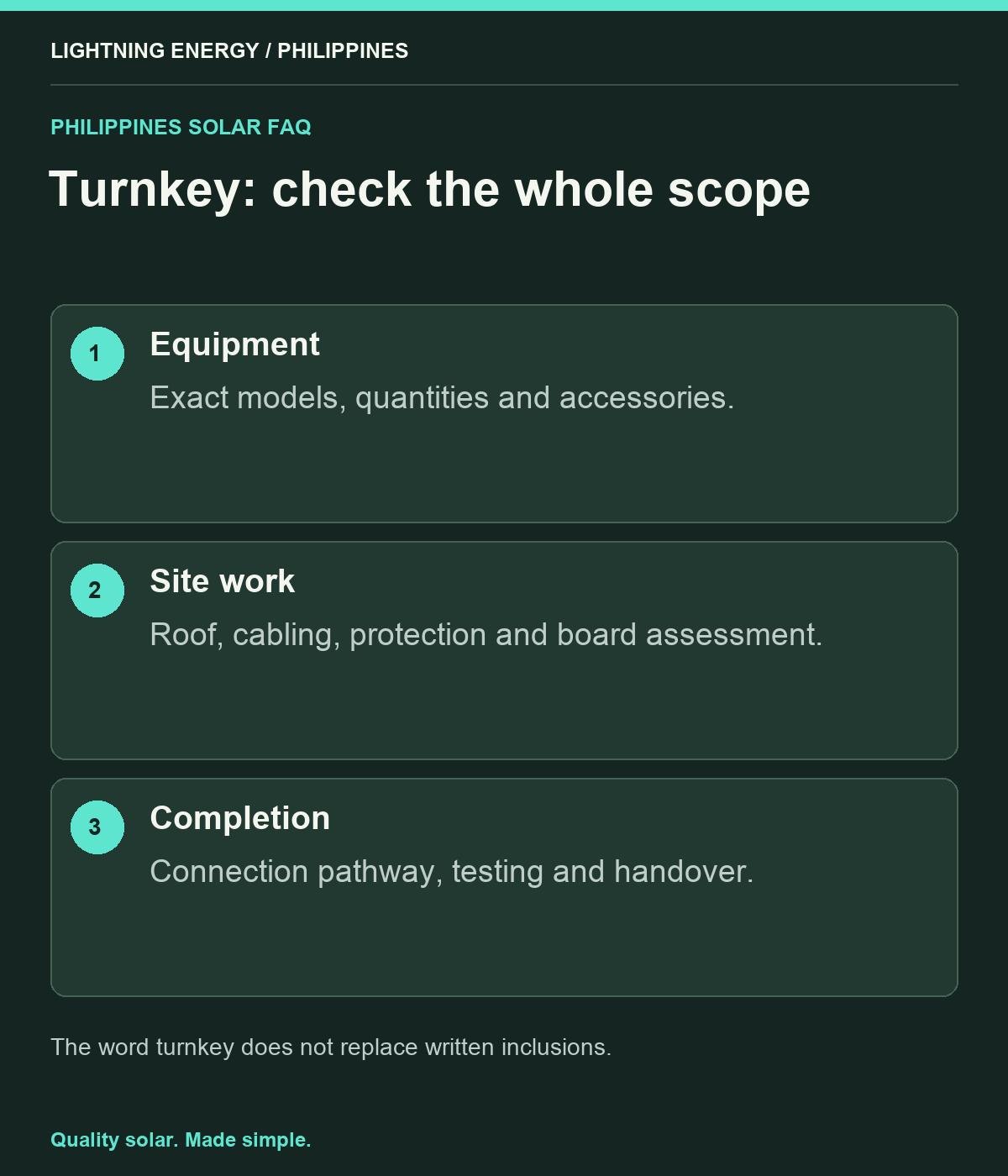
Turnkey is a sales label, not a complete scope. Ask which site work, approvals, monitoring and handover tasks are priced.
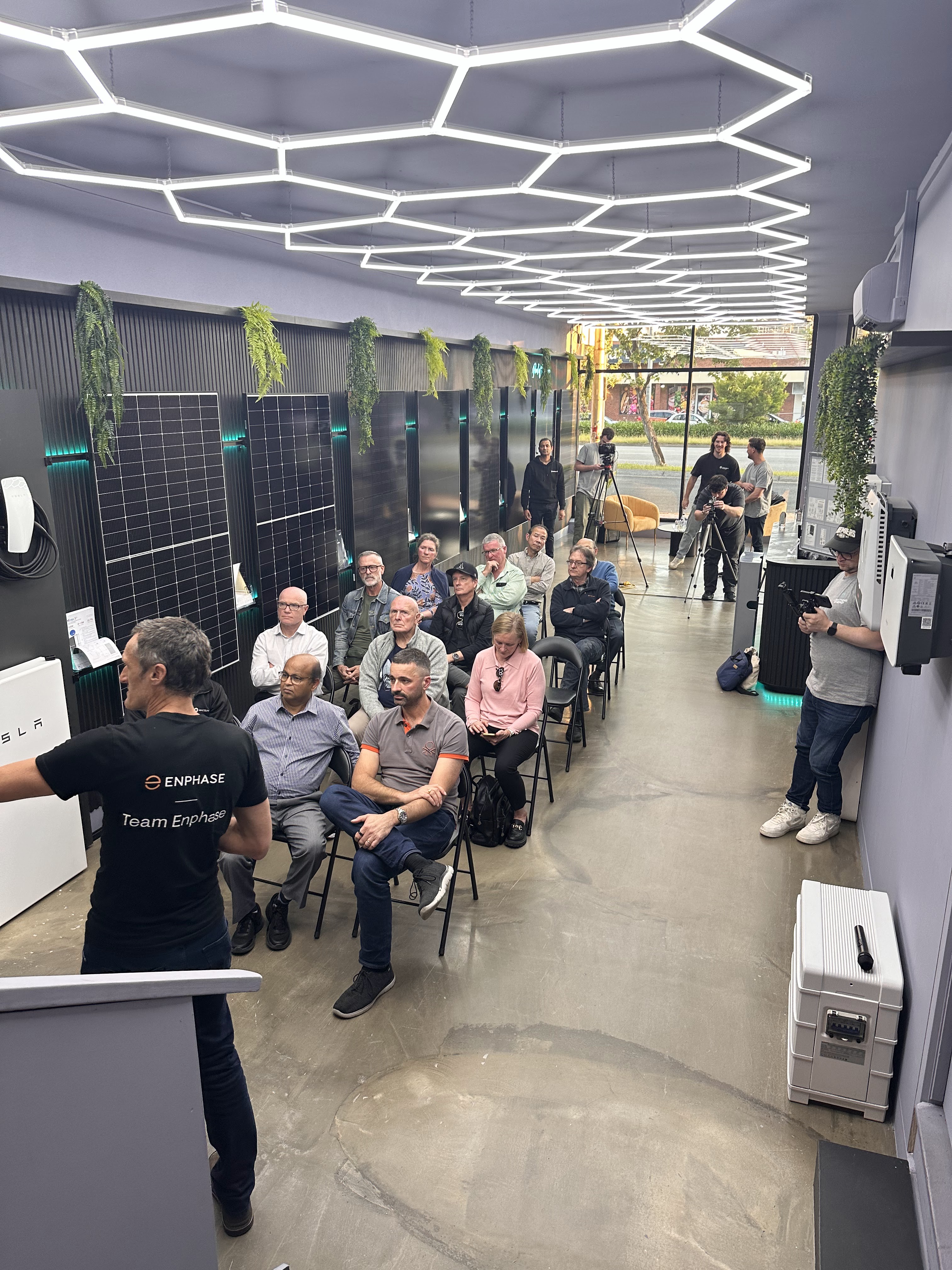
A turnkey quote should define a finished, usable scope in writing. The word alone does not establish whether roof repairs, electrical upgrades, utility processing, monitoring hardware or backup circuits are included. Compare the deliverables and exclusions before comparing the total price, especially when two packages use the same panel capacity but promise different outcomes.
Start with the promised end state
Write one sentence describing what you expect to receive: an approved grid-connected solar system, a qualifying own-use installation, or solar with specified outage backup. Each has different tasks. Ask the supplier to repeat the agreed outcome in the quotation rather than leaving it buried in a sales conversation.
List the rooms or circuits that must remain powered if backup is included. A battery in the equipment list does not define the backup arrangement. Ask what successful completion looks like and how the installer will demonstrate it, so the final payment relates to an observable result.
Separate equipment from site work
Require exact panel, inverter, battery and mounting models, plus quantities and key accessories. Then identify cable routes, board work, protection, access equipment and roof-related tasks. A photograph of premium equipment is not evidence that every necessary component is included in the price.
Ask which assumptions were made before the site inspection. If a quote is provisional, request a process for approving variations before work begins. Useful exclusions are specific: a defined roof repair or service upgrade needing assessment. A broad clause allowing unspecified extras makes it difficult to compare the offer with another installer’s complete scope.
Identify who handles the connection pathway
Meralco’s published net-metering process includes documents, technical assessment and commissioning tasks, with some requirements depending on the installation. [1] Ask which party prepares each item, which fees are included and which costs remain payable directly to the utility or another authority.
For another supplier or an own-use pathway, obtain the corresponding current list. Avoid copying a quoted fee from a different project. The quotation should distinguish administrative assistance from the authority’s decision: an installer can manage submissions but should not promise an approval result that the relevant organisation has not yet confirmed.
Make monitoring and handover tangible
Ask whether you receive production monitoring only or also household consumption and battery-flow visibility. Specify account ownership, data access and any ongoing subscription. Request manuals, serial numbers, electrical records, commissioning results and the warranty documents for the supplied models.
US DOE’s consumer guidance encourages homeowners to work with an installer for a site-specific estimate. [2] Use that principle here by asking for the assumptions behind generation and savings, while excluding US-specific incentive information. A proposal should leave you able to understand the system rather than dependent on a salesperson’s unexplained annual peso figure.
Compare a realistic variation scenario
Imagine two illustrative quotes for the same panel capacity. One includes the assessed switchboard work and consumption meter; the other assumes the existing board is suitable and lists monitoring as optional. Their totals are not directly comparable until those differences are priced.
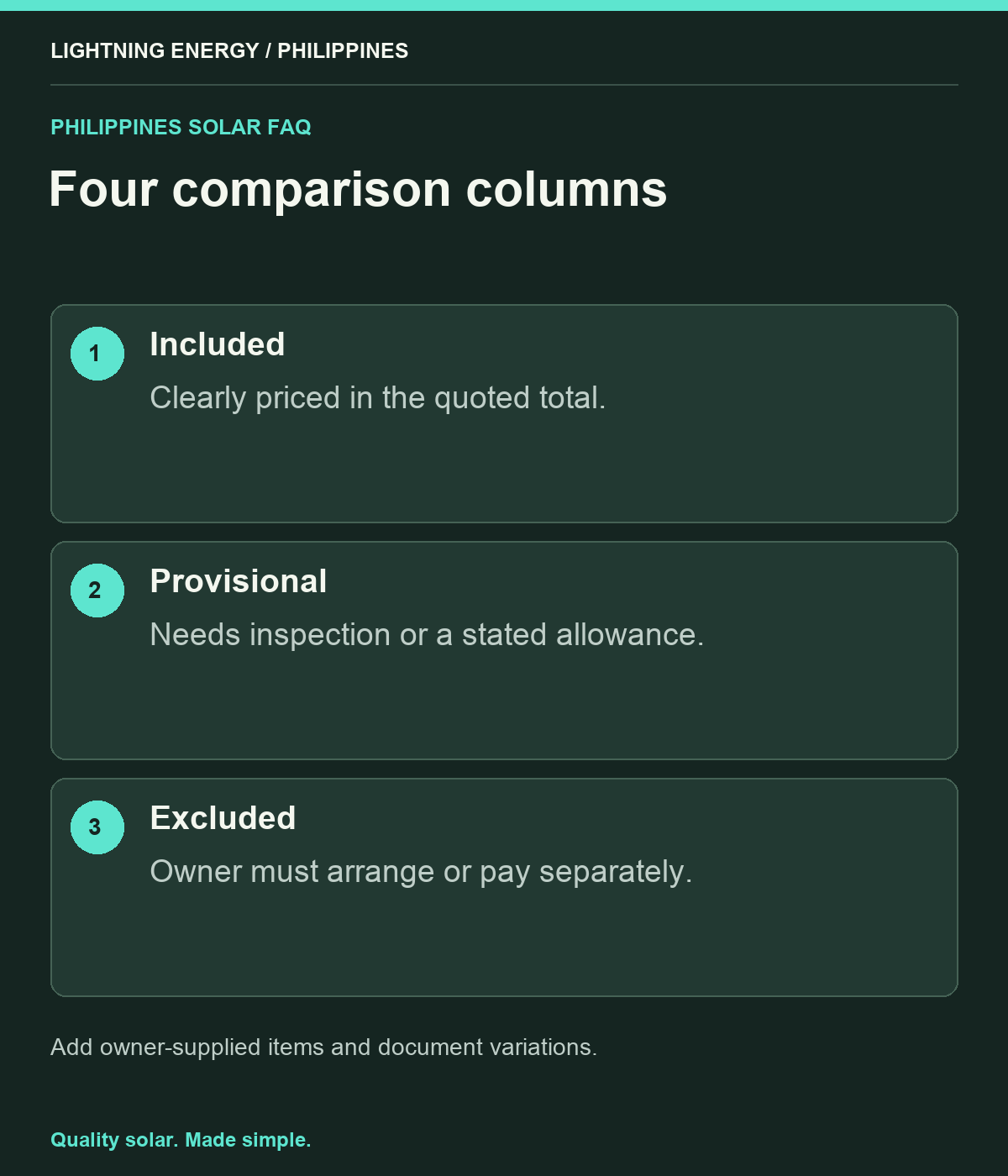
Create columns for included, excluded, provisional and owner-supplied items. Add the cost of making both proposals meet the same requirement, without inventing prices for unknown work. Ask for unresolved items to be inspected or bounded. The aim is a fair comparison, not forcing every installer to use identical equipment or methods.
Agree acceptance and service responsibilities
Define payment milestones, the variation process, workmanship coverage and the route for reporting a fault. Ask who pays for diagnosis, travel, removal and reinstallation if a component claim is accepted. Keep manufacturer and installer obligations separate and request the documents that support each promise.
Bring competing scopes to Lightning Energy Philippines and ask for a like-for-like explanation. A good conversation should identify meaningful differences in deliverables and assumptions. Choose with a clear view of the complete project and aftercare, rather than relying on the word turnkey to fill gaps that the written quotation never addressed.
Sources & further reading
Sources used for this guide. Policy and product details should be checked for your particular installation.
- Meralco — Net-Metering Application ProcessAccessed 27 September 2026
- US Department of Energy — Homeowner’s Guide to SolarAccessed 27 September 2026