Across Asia
Beyond the Home Battery: Read Long-Duration Storage Headlines by the Service
Large storage projects and household batteries answer different questions. Start with the service duration and system boundary.
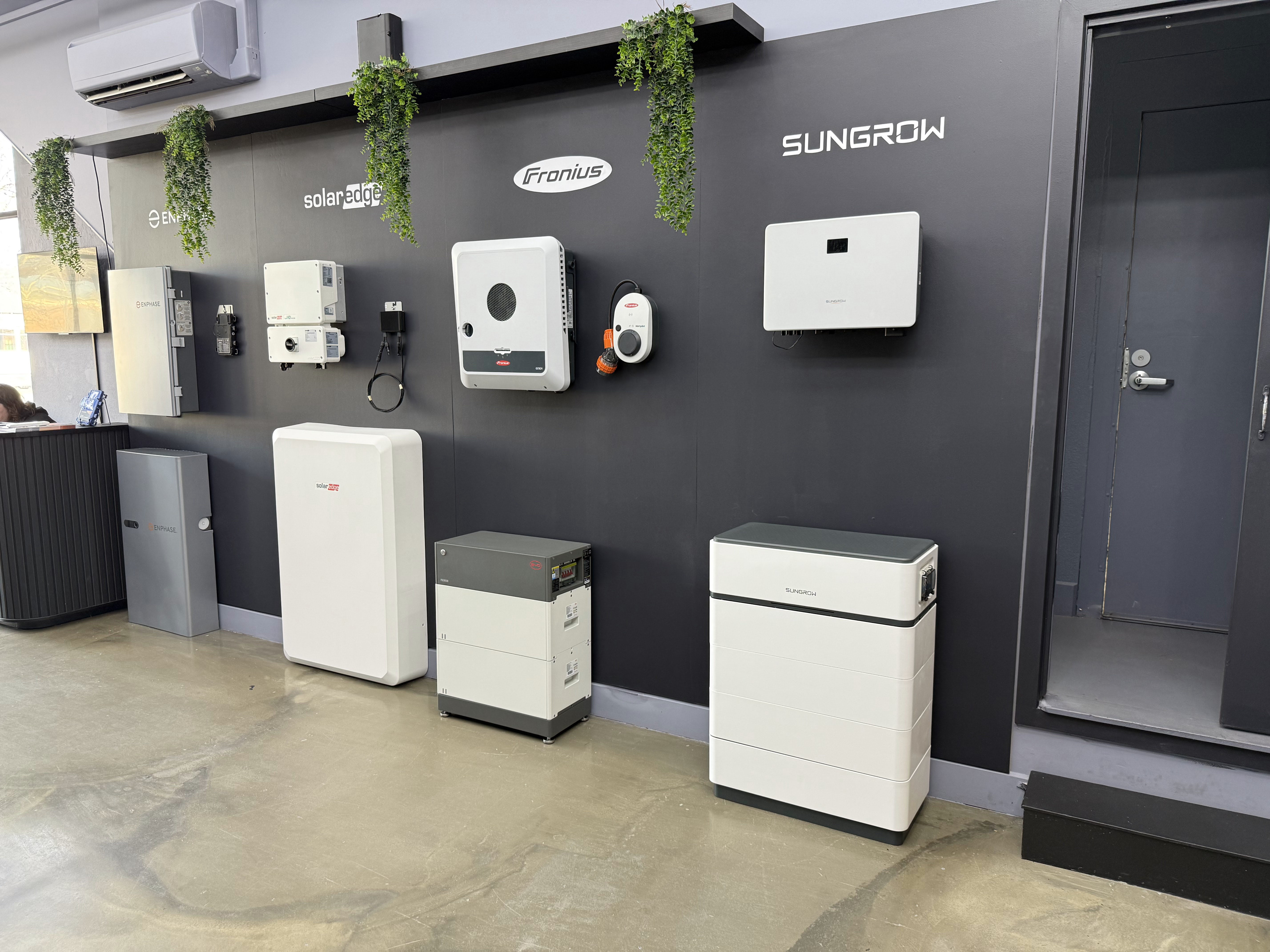
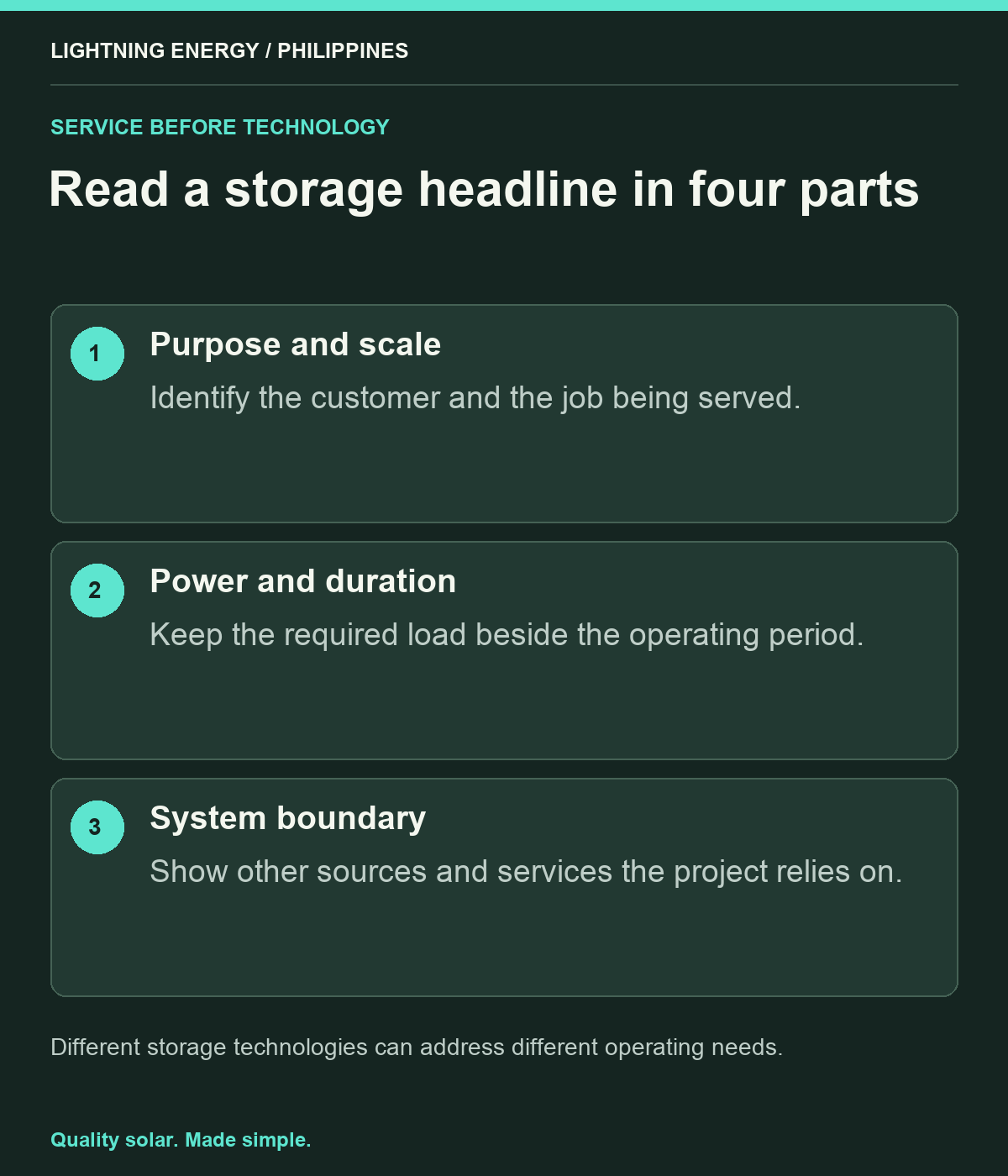
A storage headline can describe anything from equipment serving a household to infrastructure supporting a wider power system. The word battery does not tell a reader how much power is available, for how long, or under which operating conditions.
For Philippine buyers following Asian energy developments, a better approach is to classify the service before comparing the technology. This makes major project announcements easier to understand without assuming their economics or operating model apply to a residential installation.
Recognise the range of storage approaches
IRENA’s storage overview includes batteries, pumped hydro, thermal stores and other technologies. [1] The existence of several approaches is a reminder that storage is a service category, not one standard product. A technology appropriate to a large network project may require infrastructure or operating arrangements outside a household’s scope. Read each example with its scale and purpose attached. The useful comparison asks what the project is meant to do, rather than ranking every storage headline as a competitor to a home battery.
Put duration beside the required power
Ask the designer to explain the relationship between the loads being served and the energy available over the proposed period. The owner’s brief should state the service required, not merely a desired number of hours detached from demand. For an illustrative small office, keeping a limited essential service running is a different requirement from maintaining ordinary whole-site operation. Have the assessment show the assumed load and operating limits so any duration claim can be interpreted in context.
Separate shifting energy from continuous supply
IRENA’s 2026 firm-renewables report studies combinations of renewable generation and storage intended to provide round-the-clock electricity. [2] That is a broader assessment than showing that a battery can move some daytime generation into an evening period. A household proposal should state exactly which service it offers. Do not turn a single successful operating day or an annual energy balance into a claim of continuous independence. Ask the designer how the relevant difficult periods are treated in the assessment.
Draw the system boundary
Identify which energy sources, network services and equipment the project relies on. A storage project can have a clear and valuable purpose while still depending on other parts of the energy system. For a local proposal, mark what happens inside the property and what relies on the utility or another provider. This boundary helps the owner understand the offer. It also prevents a large project’s public description from being shortened into a misleading claim that one technology alone supplies every service.
Compare costs for the same job
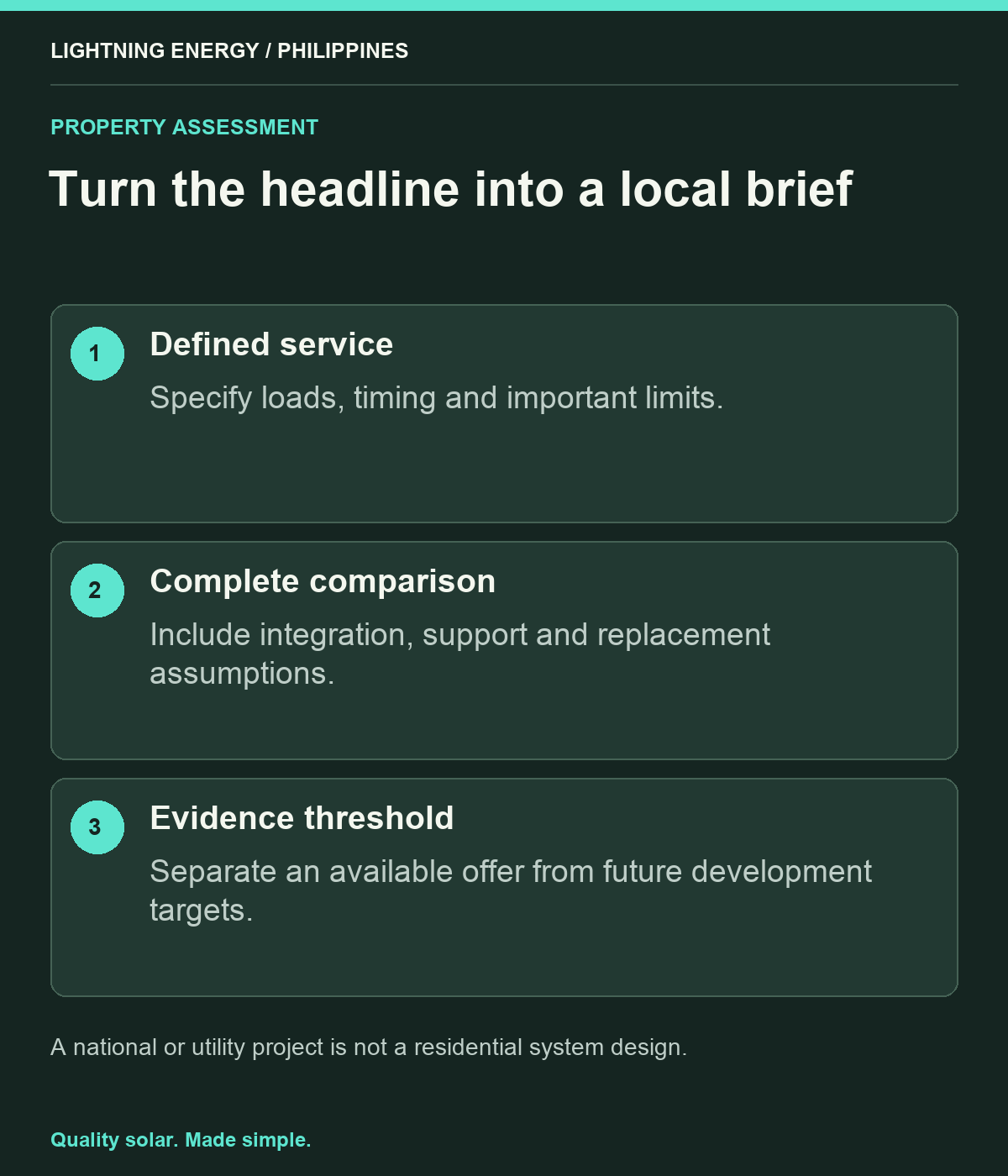
When reviewing options, use the same required service and include the work needed to deliver it. Ask which costs relate to equipment, integration, installation, ongoing support and future replacement. A headline cost per unit of capacity does not define the full local project. Avoid borrowing utility-scale economics for a household estimate. The owner should be able to see why the alternatives differ and whether each one meets the stated brief before treating a lower advertised price as a better result.
Keep emerging options on a separate watchlist
New storage approaches may deserve attention without being ready for the owner’s current project. Record what evidence would make an option relevant: a suitable supported product, demonstrated operation in the intended application or a clear local delivery pathway. Keep development targets labelled as targets. This allows a business to follow regional innovation while making present decisions on evidence available now. It also avoids assuming that a technology’s possible future role is the same as an offer a customer can buy today.
Describe the service in one sentence
Before accepting a proposal, try to state its purpose plainly: the specified loads, intended operating period, energy source and important limits. If that sentence remains unclear, ask for the assessment to be explained again. Lightning Energy Philippines can discuss a property’s requirements and the information needed to assess suitable solar-and-storage options. Large Asian storage developments are valuable context, but the best local decision begins with a service that the owner can describe and a complete system that is designed to deliver it.
Sources & further reading
Sources used for this guide. Policy and product details should be checked for your particular installation.
- IRENA: Energy storage costsAccessed 27 September 2026
- IRENA: 24/7 Renewables—The Economics of Firm Solar and WindMay 2026; accessed 27 September 2026